
How to Overcome Exam Fear and Build Self-Confidence ?
For senior secondary students preparing for board exams across CBSE, ICSE, ISC, and NIOS, test anxiety and pre-exam stress are common hurdles. When faced with heavy commerce syllabi—from Accountancy numericals and financial statements to Business Studies case studies—the pressure to perform can feel overwhelming.
However, exam fear isn’t a reflection of your potential or preparation; it is simply a natural reaction to uncertainty. By adopting simple, practical strategies to manage stress, defeat fear of failure, and maintain sharp focus on test day, you can build unshakable self-confidence and perform at your best.
1. Shift Your Mindset: View Tests as Feedback, Not Failure
The fear of failure often stems from viewing exams as a final judgment of your ability. When you treat every practice paper or pre-board test as a high-stakes test of worth, minor errors trigger anxiety.
- Reframe Mistakes: Making mistakes during practice tests is actually beneficial—it pinpoints exact knowledge gaps before final exams so you can fix them early.
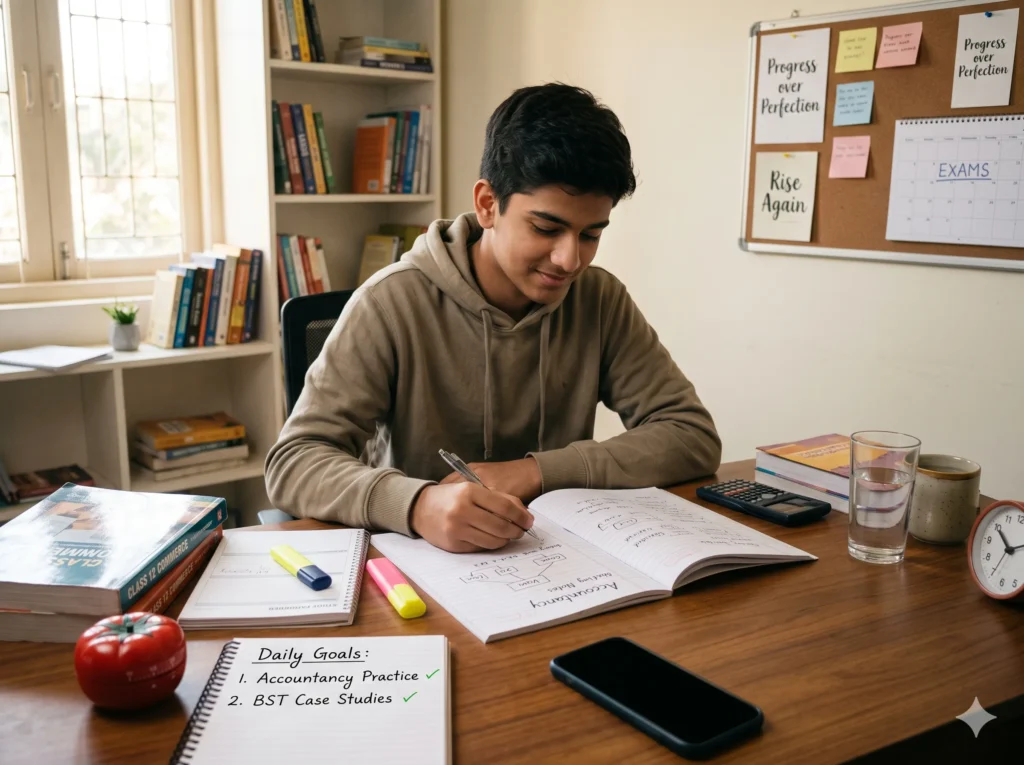
- Focus on Process Over Results: Instead of worrying about final marks, focus on completing small daily targets, such as reviewing 3 partnership journal entries or solving 2 case studies.
2. Defeat Pre-Exam Stress with Structured Daily Habits
Uncertainty feeds fear, while preparation builds confidence. Creating a calm, structured routine before exams removes last-minute panic.
- Use Short Focus Sprints: Avoid marathon 5-hour study sessions that lead to mental fatigue. Study in focused 25-to-45-minute intervals (using methods like the Pomodoro Technique) followed by short 5-minute breaks to keep your mind fresh.
- Active Recall Over Passive Rereading: Simply rereading textbook pages creates an illusion of knowing the material. Test yourself using flashcards, practice questions, or writing down key concepts from memory to lock information into long-term memory.
- Protect Your Sleep: A tired brain is far more prone to anxiety and silly calculation mistakes. Ensure you get 7 to 8 hours of sleep, especially during exam week.
3. Build Unshakable Test-Day Focus
When test day arrives, maintaining emotional calm is just as important as knowing the concepts. Here is how to handle pressure inside the examination room:
- Use the 15-Minute Paper-Reading Strategy: Use the initial reading time to review choices, identify familiar questions, and map out your time allocation before writing a single word.
- Tackle High-Confidence Questions First: Start with questions you know well. Securing initial marks early builds momentum and eases test-day nerves.
- Practice Grounding & Breathing: If panic sets in during the exam, pause, take 3 slow deep breaths, and remind yourself that you are prepared.
Summary Checklist for Overcoming Exam Anxiety
- Break Big Goals into Daily Steps: Small, daily efforts accumulate into major success over time.
- Keep Distractions Away: Keep your phone in another room during study sessions to maintain concentration.
- Believe in Your Resilience: Setbacks and tough questions are temporary; your self-belief is what carries you through.
Conclusion: Confidence Comes from Smart Consistency
Scoring high in board exams is not about studying non-stop without rest; it is about building a balanced, steady habit that supports both academic goals and mental well-being. By replacing last-minute cramming with structured preparation and viewing mistakes as constructive feedback, you eliminate fear, build real confidence, and achieve academic success.
For structured live classes, step-by-step video courses, downloadable study materials, and interactive board preparation for Class 11 & 12 Commerce across CBSE, ICSE, ISC, and NIOS, visit www.commbizacademy.com.
Keywords:
- How to overcome exam fear
- How to manage pre-exam stress
- Overcoming exam anxiety
- Board exam stress management
- Building self-confidence for exams
- Board exam preparation tips